The Perkiomen Runs Through It
Collegeville is a borough in Montgomery County, in the 19426 ZIP, on the Perkiomen Creek and home to Ursinus College. It combines an old borough core with substantial modern subdivision development across the surrounding townships, and a good deal of new commercial and residential building along the Route 422 corridor.
The dominant local factor is the creek. The Perkiomen Creek drains a large watershed before joining the Schuylkill near Oaks, and it rises very rapidly in heavy rain. On 1 September 2021 the remnants of Hurricane Ida produced catastrophic flooding across southeastern Pennsylvania. The USGS recorded new peak streamflows of record at numerous gauges across the region during that event. Record flooding along the Perkiomen was part of that event, and the low ground along the creek corridor through and around Collegeville is genuinely exposed.
Water from a flooded creek is black water — it has passed over roads, through storm drains, past fuel storage and frequently through sanitary systems. The standard of care requires removing all porous material it contacted: drywall, insulation, carpet, pad, cabinetry. Drying and cleaning in place is not the standard for this category, whatever a low quote suggests. If your property flooded in September 2021 and the work was done quickly, it is worth checking whether porous material was actually removed or simply covered over.
Flash Flooding Is Different From River Flooding
Worth understanding, because it changes what you should prepare for. The Perkiomen is a creek draining a large watershed, not a major river with a slow-rising flood wave. It responds fast — heavy rain upstream produces a rise within hours, sometimes with little warning, and the water can arrive and recede within a day.
That has two consequences. First, there is less time to act, so preparation matters more than response: knowing whether your property is in the mapped floodplain, having a working sump with a battery backup, and keeping nothing irreplaceable on a basement floor. Second, a fast rise and fall means water can enter, saturate materials and leave within a day, which occasionally leads people to under-react. The materials are just as wet either way, and the 24-to-48-hour clock on mold growth starts the moment they get wet.
The Modern Subdivision Housing
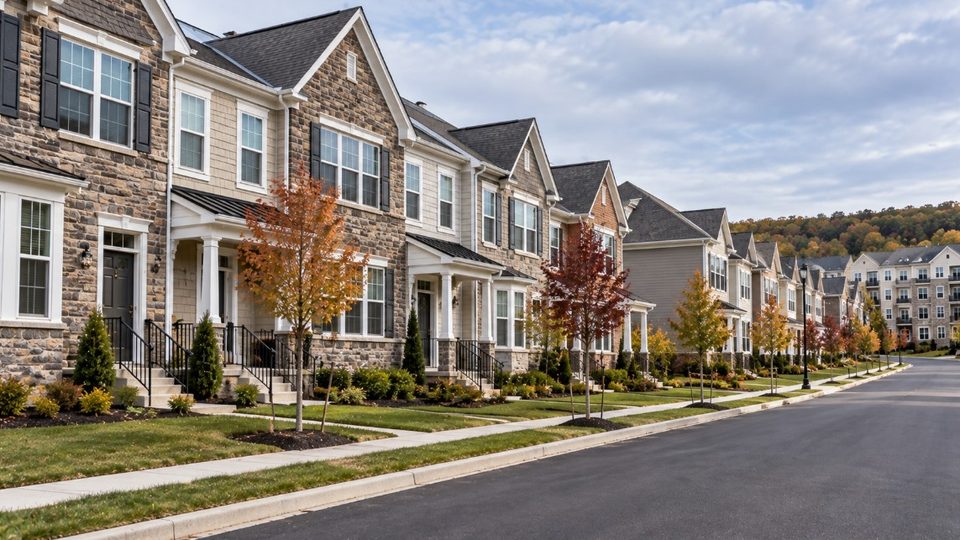
Away from the creek, most Collegeville-area housing is 1980s through 2010s subdivision development, and it follows the standard regional pattern:
- Finished basements built the wrong way. Stud wall against the foundation, fiberglass batts, paper-faced drywall. Growth on the concealed face for years before any odour reaches the room. The most common call we take from this area after flood work.
- Vented crawl spaces where parts of a house sit over one. Vents import humid summer air into a cool space and condense it onto the floor framing.
- Rim joists holding unsealed fiberglass batts — coldest wood in the building, almost never inspected.
- Builder-grade bath fans, undersized and wired to the light switch so they never run long enough.
- Rooms over unconditioned garages, where the under-insulated floor assembly produces the coldest interior surfaces in the house.
- Newer tight construction along the 422 corridor with the opposite problem — envelopes so tight that household moisture cannot escape without mechanical ventilation.
The Older Borough Core
Collegeville’s original borough housing and the properties around Ursinus include nineteenth and early twentieth century buildings with the corresponding issues: cellars with no damp-proof course and constant capillary rise, original galvanised supply and cast-iron drain piping long past service life, plaster on wood lath, and complex older rooflines with many flashing details and multiple ice dam locations.
Any pre-1978 building may contain lead paint and pre-1980 buildings frequently contain asbestos in pipe lagging, floor tile and mastic. Both need identifying before demolition rather than during it.
Sump Systems and Insurance
In a creek-adjacent community a sump system with a battery or water-powered backup is essential rather than optional. A mains pump is useless in a power cut, and the outage and the storm arrive together. Check the check valve, fit a sealed pit cover, and make sure the discharge line carries water genuinely away from the building rather than depositing it beside the foundation where it returns.
On insurance: standard Pennsylvania homeowners policies do not cover surface flooding from a creek leaving its banks — that requires separate NFIP coverage, which is a real consideration for anything near the Perkiomen. Sump pump failure and sewer backup are also typically excluded and both are available as inexpensive endorsements. Read your declarations page now rather than after the next event.
What We Get Called About Most in Collegeville
Ranked by how often it comes up, and tied to the buildings that are actually here rather than to mold in general.
- Perkiomen Creek flash floodingThe creek drains a large watershed and rises within hours rather than days, sometimes with little warning. Preparation matters more than response here — and the water is Category 3.
- Finished basements away from the creekMost of the work here is not flood-related at all. The 1980s–2000s subdivision housing fails through summer condensation behind a conventionally built wall, regardless of elevation.
- Sump systems without a backupA mains-only pump in a creek-adjacent community is the failure waiting to happen, because the power cut and the storm are the same weather event.
- Vented crawl spacesCommon in parts of the surrounding development, and failing for the same reason they fail everywhere in this climate.
- Older borough core housingCellars with no damp-proof course, original galvanised and cast-iron piping, and complex older rooflines with many flashing details.
Neighborhoods and Sections We Cover in Collegeville
Mold Services Available in Collegeville
Mold Inspection
Thermal imaging and moisture metering to locate the source before anything is opened up.
DetailsBasement Mold Removal
The dominant mold problem in Collegeville — finished walls, stone foundations and sump failures.
DetailsBlack Mold Removal
Full containment for water-damage indicator species, plus finding the sustained water source.
DetailsAttic Mold Removal
Sheathing and rafter growth traced back to ventilation, bath fans or ice damming.
DetailsWater Damage & Flood Mold
Burst pipes, sump failures and flooding — the 24 to 48 hour response window.
DetailsClearance Testing
Independent verification by a hygienist who did not perform the remediation.
DetailsWhat Mold Work Costs in Collegeville
General market ranges for the Greater Philadelphia area, listed for the situations that actually come up in Collegeville. These are planning figures rather than quotes — nobody can price a job they have not seen, and what moves a number most is the size of the wet area rather than the stained area. The full cost guide explains what drives each one up or down.
| Work | Typical range | Notes |
|---|---|---|
| Mold inspection with thermal imaging and moisture metering | $300–$700 | Most projects should start here |
| Emergency extraction and structural drying | $1,500–$5,000 | Within 24 hours this usually prevents the job above |
| Post-flood remediation, Category 3 water in living space | $8,000–$25,000+ | All contacted porous material must be removed |
| Finished basement — wall removal, drying, clearance | $5,000–$15,000 | Excluding reconstruction |
| Crawl space remediation with full encapsulation | $5,000–$15,000 | Vapour barrier, sealed vents, wall insulation, dehumidifier |
| Sump pump replacement with battery or water-powered backup | $800–$2,500 | The highest-value preventive spend in a low-lying property |
| Independent post-remediation clearance testing | $350–$700 | The only stage that produces evidence rather than assurance |
Mold FAQ — Collegeville, PA
Yes, and we still see it. Creek floodwater is Category 3 black water, and the standard requires removing all porous material it contacted — drywall, insulation, carpet, pad, cabinetry. The 1 September 2021 event overwhelmed contractor capacity across the region for months, and a great deal of work done then was incomplete: water extracted, surfaces cleaned, new drywall hung, but cavities never dried to documented targets and no clearance testing performed. Where contaminated material was covered over instead of removed, it is still in the wall. Persistent musty odour, staining or a wavy line at the base of walls, or a basement that has never smelled right since are all worth investigating.
No. Standard Pennsylvania homeowners policies exclude surface flooding, whether from a creek, a river or rain overwhelming the ground. That requires separate National Flood Insurance Program coverage, which is a genuine consideration for any property near the Perkiomen. Two further gaps matter here: sump pump failure and sewer backup are typically excluded from a standard policy and both are available as inexpensive endorsements. Given how fast the Perkiomen responds to heavy rain, checking your declarations page now is worth the ten minutes.
Fast. It drains a large watershed and responds to heavy rainfall within hours rather than days, sometimes with limited warning, and the water can arrive and recede inside a day. That changes what you should do: preparation matters more than response. Know whether your property is in the mapped floodplain, keep a working sump with a battery or water-powered backup, keep nothing irreplaceable on a basement floor, and know where your main water shut-off is. And do not under-react to a fast event — water that arrives and leaves within a day leaves materials just as wet, and the 24-to-48-hour clock on mold growth starts the moment they get wet.
General market ranges: a small contained area, roughly $600 to $1,800. A finished basement excluding reconstruction, roughly $4,000 to $12,000. Post-flood remediation where Category 3 water reached living space, commonly $8,000 to $25,000 because all contacted porous material must be removed. Crawl space remediation with encapsulation, roughly $5,000 to $15,000. Inspection roughly $300 to $700. Emergency extraction and structural drying immediately after an event, roughly $1,500 to $5,000 — and that is the spend that prevents the larger one. Planning ranges, not quotes.
From flooding, largely yes — but flooding is not where most of our Collegeville work is. The bulk of it is in 1980s through 2000s subdivision housing with finished basements built the conventional way: stud wall against the foundation, fiberglass batts, paper-faced drywall. That assembly fails in this climate regardless of where the creek is, because the driver is summer condensation on cold masonry rather than any leak. If your basement is finished and you have a persistent musty smell with nothing visible, that is worth checking whatever your elevation. Also worth checking: the rim joist, where every bath fan terminates, and whether the grading still falls away from the house.