The Honest Starting Point
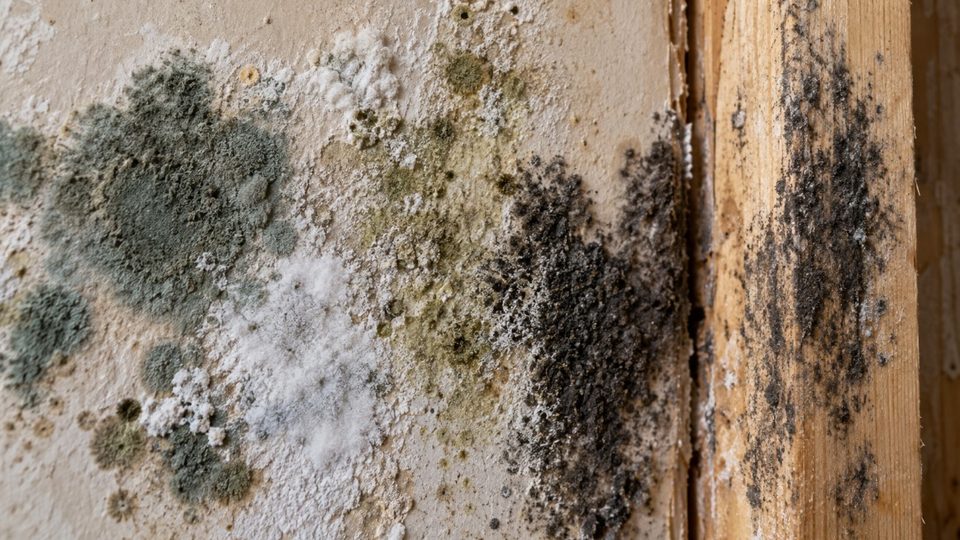
You cannot identify a mold species by looking at it. Nobody can — not a homeowner, not an inspector, not a contractor with thirty years in the trade. Dozens of common genera present as dark green or black growth, and several of the ones people most want to distinguish are visually indistinguishable even under a microscope without staining and culturing.
What you can do, and what this page is for, is read the surroundings. Where the growth is, what it is growing on, and how wet that material has been tells you far more than colour does — and it tells you the thing that actually matters, which is how serious the underlying water problem is.
This is the most common sales tactic in the trade. “That's toxic black mold” delivered in your basement, before any sample has been taken, is fear management rather than diagnosis. If species identification genuinely matters for your situation — an insurance claim, a landlord dispute, a physician's request — it requires a swab or tape lift analysed by a laboratory, at roughly $50 to $125 per sample.
What Is Actually Growing in Southeastern Pennsylvania Homes
Laboratory reports from this region come back with a fairly predictable cast. Here is what each one indicates about your building — which is the useful part.
| Genus | Usually looks like | Where it turns up here | What it tells you |
|---|---|---|---|
| Cladosporium | Olive-green to brown or black, powdery or suede-like | Everywhere — window frames, bathroom grout, damp basement surfaces, the back of furniture on exterior walls | The most common outdoor mold in temperate climates. Indoors at levels similar to outdoors is normal ecology, not a finding. Heavy localised growth means a damp surface. |
| Penicillium / Aspergillus | Blue-green, grey-green or yellowish, often velvety | Water-damaged drywall, carpet and pad, HVAC components, stored paper and cardboard | The strongest indoor amplification signal in this region. Laboratories report them as one group because their spores are not reliably separable by microscopy. Elevated indoors means a damp indoor material. |
| Stachybotrys chartarum | Dark greenish-black, often slimy or wet-looking rather than fuzzy | Chronically saturated drywall paper, cardboard, wood — behind finished basement walls, around long-running leaks | A diagnostic event. Requires cellulose saturated for a week or more, so its presence means a sustained water failure, and the wet area is almost certainly larger than the stained area. |
| Chaetomium | Cotton-like, turning grey then black; sometimes a musty, earthy smell | Wet drywall and wallpaper, water-damaged wood | Another water-damage indicator, same implication as above: prolonged wetting of cellulose material. |
| Alternaria | Dark green to brown, velvety with fine hairs | Showers, under sinks, around window condensation, damp drywall | Common outdoors and a well-documented allergen. Indoors it points at a persistently damp surface rather than a catastrophic leak. |
| Aureobasidium | Pink, brown or black; often slimy | Caulk lines, grout, window sills, behind wallpaper | The classic bathroom and window-sill organism. Almost always a condensation or splash problem rather than a structural one. |
| Ulocladium | Black, often mistaken for Stachybotrys | Areas of significant water damage | Indicates heavy wetting. Frequently the organism that a contractor calls “black mold” on sight. |
| Serpula lacrymans and other wood-decay fungi | Rust-brown, white strands, or a cubical cracking pattern in the wood | Crawl space joists, sill plates, hidden structural timber | A structural problem, not an air quality one. Needs sustained moisture content above roughly 28%, and it consumes the wood rather than merely staining it. |
“Is This White Mold?” — Usually Not
The single most common misidentification in this region, and the good news is that you can settle it yourself in thirty seconds.
White powdery deposit on masonry — a basement wall, a foundation, the face of a stone cellar — is almost always efflorescence: mineral salts left behind when water passes through the masonry and evaporates at the inside face. It is crystalline, it brushes off dry as a powder, and it dissolves in water.
Mold is filamentous. It is fuzzy, furry or slimy rather than crystalline, it does not dissolve in water, and it smears rather than brushing away cleanly. Genuine white mold does exist — some Penicillium and Aspergillus colonies appear white before they mature and develop colour — but on masonry the odds strongly favour efflorescence.
Put a drop of water on it. Efflorescence dissolves and disappears. Mold does not. Then brush it: efflorescence comes away as dry powder leaving clean masonry; mold smears and leaves a stain. Either way, efflorescence is not good news — it is physical proof that liquid water is moving through that wall, which is the precondition for everything else on this page.
Reading the Location Instead of the Colour
Where growth appears is genuinely diagnostic, and unlike colour it is something you can assess yourself.
- On grout, caulk and window sillsSurface condensation. Usually Aureobasidium, Cladosporium or Alternaria. Cosmetic in scale, cleanable, and a ventilation or thermal-bridge problem rather than a building failure.
- Evenly across a basement wall, worse in summerCondensation on cold masonry. The mechanism, not a leak — see why your basement is damp in July.
- A defined band at the base of a wall, with white bloomCapillary rise through the masonry. Constant rather than seasonal.
- Behind or beneath a finished surfaceConcealed growth on the back of drywall or in insulation. This is where Stachybotrys and Chaetomium turn up, and where the extent is always larger than it looks.
- A localised patch near one fixtureA plumbing leak. Unrelated to weather, unrelated to season.
- A dark cone on attic sheathing above a bathroomA bath fan discharging into the attic. One of the most common causes in this housing stock and among the cheapest to fix.
- Spongy, crumbling or cubically cracked woodNot surface mold at all. Wood decay, and a structural assessment rather than a remediation one.
Does the Species Change What You Should Do?
Usually no, and this surprises people who have spent an evening reading about mycotoxins.
The protocol for safely removing water-damaged porous material is the same regardless of genus: find and fix the water, contain the area with HEPA-filtered negative air, remove the contaminated porous material rather than treating it, dry the structure to documented targets, and verify independently. Nothing in that sequence changes because a laboratory writes Penicillium rather than Stachybotrys on the report.
What the species does change:
- How hard you look for the water. Stachybotrys or Chaetomium means sustained saturation, so the investigation widens.
- The documentation. Insurance claims, landlord disputes and real estate matters all benefit from a named organism on an accredited laboratory report.
- Medical conversations. Occasionally a physician asks, particularly for an immunocompromised patient. That is a reason to test.
- Whether it is mold at all. Wood decay fungi and efflorescence both get called mold and neither is treated as mold.
If you do want it identified, mold testing explains the sampling methods and what an accredited laboratory report actually tells you — including why an outdoor control sample is not optional.
Frequently Asked Questions
Not in the way the phrase implies. “Black mold” is a colour, and dozens of genera are dark. When people mean Stachybotrys chartarum specifically, its significance is mainly diagnostic: it needs cellulose saturated for a week or more, so finding it tells you there has been a serious, sustained water failure — and that the wet area is larger than the stained area. On health, damp buildings are associated with respiratory symptoms and worsening asthma; the stronger claims about mycotoxins causing systemic illness in ordinary homes are not established. See black mold removal for the full version.
Usually not mold at all. Pink or orange film in showers and around drains is most often Serratia marcescens, a bacterium that thrives on soap residue and moisture, or in some cases Aureobasidium. Either way it is a surface organism on a wet surface, it cleans off with an ordinary bathroom cleaner and a brush, and it comes back if the surface stays wet. The fix is ventilation: run the extractor fan for twenty minutes after the shower, which realistically means fitting a timer switch.
You can. Several accredited laboratories accept direct-mail samples from homeowners, and a tape-lift kit typically costs $40 to $80 per sample including analysis. Two cautions. Surface sampling tells you what is on that patch and nothing about air quality, so do not use it to decide whether a house is safe. And sampling technique matters — a contaminated or poorly taken sample produces a confident-looking report about nothing. For anything where the result will be used in a dispute or a transaction, have a professional take it.
The smell is microbial volatile organic compounds, produced by many fungal species as they metabolise. It does not identify a genus, but it does tell you something important: MVOCs are produced by living, actively growing colonies. A musty smell is not a residue of a past problem — it means something is wet enough to support growth right now. That makes odour one of the more useful signals available to a homeowner, and a reason not to dismiss it when nothing is visible.
A surface swab or tape lift analysed by an accredited laboratory generally runs $50 to $125 per sample in this market, with results in two to five business days. Culturable analysis, which grows the sample to identify species more precisely, takes seven to fourteen days and costs more. Before paying, ask yourself whether the answer changes what you will do — in most straightforward cases it does not, and the money is better spent on the inspection that finds the water or on clearance testing that proves the work succeeded.