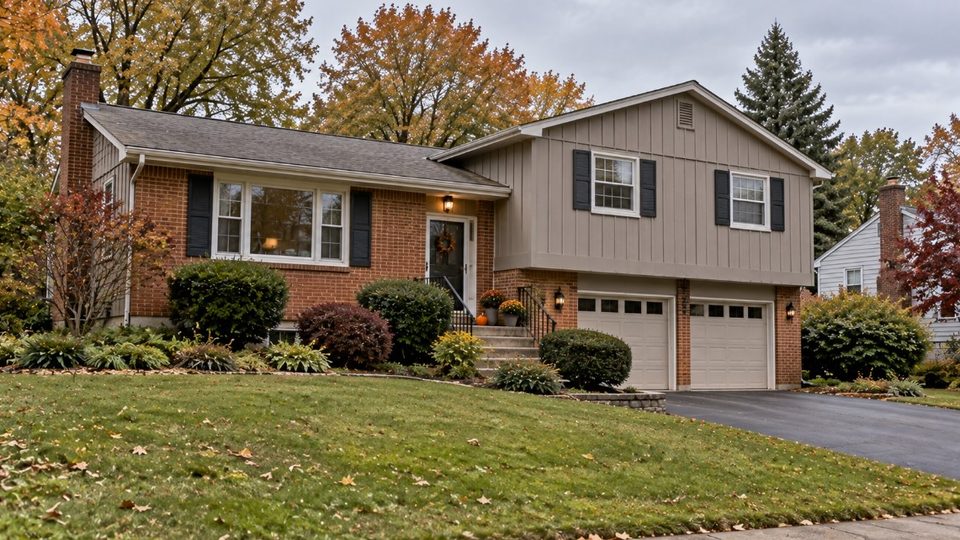
A Small Section of Upper Merion With a Long History
Buttonwood sits in Upper Merion Township within the King of Prussia 19406 area, off South Gulph Road. The name comes from the Buttonwood property — the home of Jonathan Roberts, who served as a United States Senator from Pennsylvania between 1815 and 1821, built on family land whose ownership traces back to the 1600s. Part of the original farmland was sold in 1915 to Valley Forge Memorial Gardens. The restored house remains visible from South Gulph Road.
That history is a useful reminder that this is old ground. Land here was farmed for two and a half centuries before it was developed, and the residential building that followed happened in distinct waves — which is why houses a few hundred metres apart can have completely different moisture problems.
What the Housing Actually Is
Buttonwood and the surrounding South Gulph Road sections of Upper Merion contain the township’s characteristic mix rather than a single uniform tract. In practical terms that means three categories, and the first question any inspector asks here is which one you are in.
Surviving pre-1900 stone. A small number of original farmhouse and outbuilding structures, some converted. Fieldstone and schist in lime mortar, rubble footings, no damp-proof course. Permanent capillary contact with the ground, and sound only so long as the assembly is allowed to remain vapour-open. See the detail on Gulph Mills, where the same building type dominates.
Postwar and mid-century single-family housing. The dominant category. Upper Merion grew at roughly 650 new residents a year between 1950 and 1980, and the Capes, ranches, split-levels and colonials built through that period make up most of the township’s established residential fabric. These carry a very consistent set of vulnerabilities.
Later infill and renovation. Houses extended, basements finished, kitchens and bathrooms modernised, and in some cases substantially rebuilt. Renovation is where most of the mold problems in this housing were actually created — not by the original builders but by later work that added a sealed assembly where there had been a breathable one.
The Specific Failures to Look For
- The rim joistThe band of framing sitting on top of the foundation wall. In pre-1980 houses it is usually bare; in later ones it holds a fiberglass batt with nothing sealing it. It is the coldest wood in the building in winter and a prime condensation surface in summer, and it is almost never inspected. Pull back a batt and look.
- Kneewall attic cavitiesIf the house is a Cape or has a Cape-style second floor, there are triangular voids behind the upstairs bedroom walls, outside the insulated envelope and connected to the house by every framing gap. Warm indoor air leaks in all winter and condenses on cold sheathing. Access is usually a small door in a closet.
- Where the bath fan actually endsGo into the attic and physically follow the duct. In unmodernised postwar housing it frequently terminates in the attic rather than through the roof or a gable — which delivers saturated shower air directly at cold sheathing, every day. This is both a common cause and a cheap fix.
- The finished basement wall, if there is oneWhere a basement was finished in the 1980s or later, the assembly is almost certainly stud wall against masonry, fiberglass batts, paper-faced drywall. Check the bottom of the drywall and behind the baseboard for softness, a wavy line, or staining.
- Base of the foundation wallWhite crystalline efflorescence marks where water is passing through the masonry and evaporating on the inside. Not mold, but proof that the mechanism is active.
- Under sink cabinets and behind appliancesSlow supply and drain leaks in closed cabinets run for months. The washing machine box and the water heater pan are the other two.
- The evaporator coil and condensate drainPermanently wet by design, dark, and sitting in the air stream that feeds every room. A musty smell that appears specifically when the system starts points here.
The Seasonal Physics, Locally
Buttonwood sits on the same ground and in the same climate as the rest of Upper Merion, so the two-season pattern applies exactly as it does across the township. In summer, buried foundation walls at 52 to 58°F meet outdoor dew points in the mid-60s to low 70s°F and condense water out of the air with no leak involved. In winter, warm indoor air pushes outward and upward into wall and roof assemblies and condenses on cold sheathing, with ice damming at the eaves adding a second mechanism in older low-eave housing.
The practical consequence for a homeowner here is the same as everywhere in the township: a basement that is damp in July and dry in January does not have a leak. It has a condensation problem, and the fix is to close it to outdoor air and dehumidify mechanically rather than to waterproof it.
Radon, While You Are Down There
Upper Merion sits within the area of elevated radon potential associated with the region’s Piedmont crystalline geology. Roughly 40 percent of Pennsylvania homes tested come back above the EPA action level of 4 pCi/L. Radon and moisture share entry pathways — the slab-to-wall joint, slab cracks, the sump pit, utility penetrations — so sealing work done for one frequently benefits the other.
Unlike mold, radon is regulated in Pennsylvania: the Department of Environmental Protection certifies radon testers and mitigators, which means there is an actual credential to verify. A short-term test kit costs very little. If you are already opening up a basement for moisture work, it is the sensible moment to test.
What We Get Called About Most in Buttonwood
Ranked by how often it comes up, and tied to the buildings that are actually here rather than to mold in general.
- Basements finished in the 1980s and laterWhere a postwar house here was finished after the fact, the assembly is almost always stud wall against masonry with fiberglass and paper-faced drywall — invisible until the wall comes off.
- Uninsulated rim joistsPull back a batt and look. It is the coldest wood in the building in winter, a prime condensation surface in summer, and the highest-value insulation work most basements here never receive.
- Kneewall cavities in Cape-style homesIf the upstairs rooms have sloped ceilings meeting a short vertical wall, there is an unconditioned void behind it running the length of the house on both sides.
- Slow leaks under sink cabinetsClosed cabinets hide a drip for months, and particleboard decks swell and delaminate before anything reaches the floor where it would be noticed.
Neighborhoods and Sections We Cover in Buttonwood
Mold Services Available in Buttonwood
Mold Inspection
Thermal imaging and moisture metering to locate the source before anything is opened up.
DetailsBasement Mold Removal
The dominant mold problem in Buttonwood — finished walls, stone foundations and sump failures.
DetailsBlack Mold Removal
Full containment for water-damage indicator species, plus finding the sustained water source.
DetailsAttic Mold Removal
Sheathing and rafter growth traced back to ventilation, bath fans or ice damming.
DetailsWater Damage & Flood Mold
Burst pipes, sump failures and flooding — the 24 to 48 hour response window.
DetailsClearance Testing
Independent verification by a hygienist who did not perform the remediation.
DetailsWhat Mold Work Costs in Buttonwood
General market ranges for the Greater Philadelphia area, listed for the situations that actually come up in Buttonwood. These are planning figures rather than quotes — nobody can price a job they have not seen, and what moves a number most is the size of the wet area rather than the stained area. The full cost guide explains what drives each one up or down.
| Work | Typical range | Notes |
|---|---|---|
| Mold inspection with thermal imaging and moisture metering | $300–$700 | Most projects should start here |
| Small contained area — one wall section, a closet, behind a water heater | $600–$1,800 | Under roughly 10–30 sq ft |
| Single room | $1,500–$4,500 | Containment, removal, drying, clearance |
| Finished basement — wall removal, drying, clearance | $5,000–$15,000 | Excluding reconstruction |
| Attic remediation with cleaning, treatment and re-insulation | $3,500–$9,000 | Plus $400–$1,200 to reroute a bath fan properly |
| Bath fan rerouted to a proper exterior termination | $400–$1,200 | Per fan — often the single cheapest real fix |
| Independent post-remediation clearance testing | $350–$700 | The only stage that produces evidence rather than assurance |
Mold FAQ — Buttonwood, PA
No. Buttonwood is a section within Upper Merion Township, in the King of Prussia 19406 area off South Gulph Road, named after the historic Buttonwood property — the home of Jonathan Roberts, a United States Senator from Pennsylvania between 1815 and 1821, on family land dating back to the 1600s. For every practical purpose — municipal services, ZIP code, building stock and mold risk — it is part of King of Prussia and Upper Merion. Everything on our King of Prussia page applies here.
Almost certainly not, and this is worth resisting if someone tries to sell it to you. A basement that is damp in July and dry in January has a condensation problem, not an intrusion problem. Your foundation wall sits at 52 to 58°F year round; summer outdoor dew points here run in the mid-60s to low 70s. Humid air reaching that wall condenses on it. Waterproofing addresses water arriving from outside, which is not what is happening. The effective fix is to close the basement to outdoor air — keep the windows shut through the humid months — and run a correctly sized dehumidifier plumbed to a drain, set to 45 to 50 percent, from April through October.
If the upstairs rooms have sloped ceilings that meet a short vertical wall — typically three to five feet high — then yes, and there is a triangular void behind that wall running the length of the house on both sides. Access is usually a small hinged or screwed panel in an upstairs closet, at the end of a room, or behind a built-in. Open it and look in with a torch: you should see the underside of the roof sheathing, the floor joists of the void, and the back of the kneewall. Dark grey or black staining on the sheathing, particularly on the north side of the house, is the signature. It is also worth checking whether that hatch is insulated and weatherstripped, because an uninsulated hatch is a substantial air leak straight into the cavity.
General market ranges for the area: inspection roughly $300 to $700; a small contained area roughly $600 to $1,800; a single room roughly $1,500 to $4,500; a finished basement excluding reconstruction roughly $4,000 to $12,000; attic remediation with cleaning and re-insulation roughly $3,500 to $9,000. Rerouting a bath fan to a proper exterior termination, which is often the single highest-value fix in this housing, runs roughly $400 to $1,200. Planning ranges, not quotes — see the cost guide.
Yes — Buttonwood and all of the South Gulph Road sections of Upper Merion, along with the rest of King of Prussia, Gulph Mills, Maplewood, Valley Forge and the surrounding townships. Call the line and describe the property; the phone consultation is free and there is no obligation.