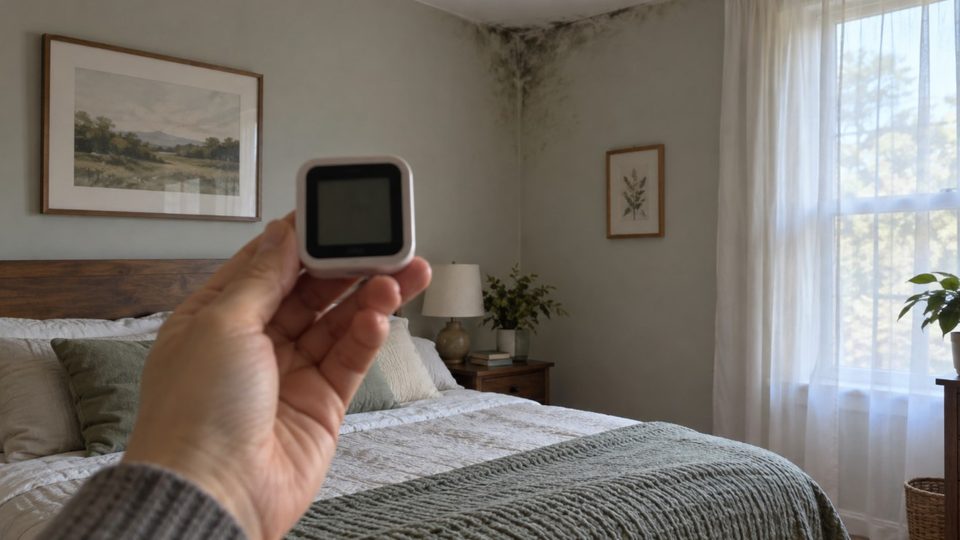
What the Evidence Actually Supports
This subject attracts more exaggeration than any other in the trade, in both directions — people are told a damp house is harmless, and people are told it is poisoning them. Neither is what the research says.
Here is the position of the major reviews. The Institute of Medicine's Damp Indoor Spaces and Health and the World Health Organization's guidelines on dampness and mould both found sufficient evidence of an association between damp indoor environments or visible mold and:
- Upper respiratory tract symptoms — nasal congestion, sneezing, runny or blocked nose, throat irritation
- Cough and wheeze
- Asthma symptoms in people who already have asthma
- Hypersensitivity pneumonitis in susceptible individuals
There is also evidence associating damp housing with the development of asthma in children, which is the finding with the most serious public-health implications.
Effects are consistently greater in people who are already susceptible: those with allergies or asthma, people who are immunocompromised, infants and young children, and the elderly.
If your house is damp and someone in it has a persistent cough, blocked nose or worsening asthma, that association is real and worth acting on. You do not need to establish that a specific species is present, and you do not need to believe anything dramatic about mycotoxins — the dampness itself is the thing the evidence points at.
What Is Not Established
The claim that mold exposure in ordinary residential buildings causes a distinct syndrome of systemic or neurological illness — variously marketed as toxic mold syndrome, mold toxicity or chronic inflammatory response syndrome — is not supported by the weight of the evidence.
To be precise about why, because the nuance matters:
Stachybotrys chartarum does produce trichothecene mycotoxins, and those compounds are genuinely toxic at sufficient dose. That part is not in dispute. The open question is whether inhalation exposure inside a typical damp house delivers a dose capable of causing systemic effects, and the evidence for that has not been established. The CDC's position has been that a causal link between indoor Stachybotrys and serious systemic illness is not proven.
This distinction is where a great deal of money changes hands. A contractor using the words “toxic”, “deadly” or “poisoning” before any laboratory has identified anything is not giving you a clinical opinion. Neither is a website selling a testing panel.
Why Killing Mold Is Not Enough
A point that follows directly from the health evidence and explains a core rule of remediation.
The allergic and irritant response is driven substantially by proteins and fungal fragments, and dead spores still carry them. Killing an organism with a biocide does not remove the material that provokes the response. This is precisely why the IICRC S520 standard is built around physical removal of contaminated porous material rather than treatment, and why a contractor proposing to spray your basement instead of removing wet drywall is offering something that does not address the health mechanism at all.
Symptoms Worth Paying Attention To
These are associations rather than a diagnostic checklist. Any of them has many possible causes, and none of them establishes that mold is responsible.
| Pattern | What makes it more suggestive |
|---|---|
| Nasal congestion, sneezing, throat irritation | Present at home, clearly better within a day or two away from it, returning on your return |
| Cough or wheeze | Worse in a particular room, or worse in the season when the building is damp |
| Asthma that has become harder to control | Deterioration that began after a water event, a move, or a change to the building |
| Eye and skin irritation | Consistently associated with time spent in a specific space, typically a basement |
| Symptoms in one household member only | That person has allergies or asthma, or spends much more time in the affected space |
| Recurring respiratory infections in a child | Alongside visible damp or a known water problem in the home |
Symptoms that improve when you leave the building and return when you come back. That is the single most useful observation available to you, it costs nothing, and it is worth writing down with dates before you speak to a doctor. It is not proof — but it is the kind of history a physician can actually work with.
What to Do, and In What Order
- Take the medical question to a physician, not to a contractorNobody in the remediation trade can diagnose you, and a company that offers an opinion on your symptoms before selling you work has a conflict of interest built into the conversation. Your GP, or an allergist or respiratory specialist on referral, is the right route.
- Keep a simple recordWhich symptoms, which rooms, what time of day, and how they change when you are away for a few days. A fortnight of notes is worth more to a clinician than a laboratory report about spore counts.
- Be sceptical of tests sold to prove mold illnessUrine mycotoxin panels and similar are marketed heavily to people who are unwell and frightened. Their validity for diagnosing environmental mold exposure is not established, and a positive result on one does not establish that your house is the cause. Discuss any such test with a physician before paying for it.
- Deal with the dampness regardlessThis is the part that does not depend on resolving the medical question. The evidence links damp buildings to respiratory symptoms; a damp building is worth fixing whether or not it is currently making anyone unwell, and it will only get more expensive.
- Protect the susceptible during the workAnyone asthmatic, immunocompromised, pregnant, or an infant should be kept out of the work area, and relocation is worth considering for extensive work. Raise it before the job starts.
Children, Pregnancy and Immunocompromise
Three groups where the case for acting sooner is stronger.
Children. The association between damp housing and the development of asthma in children is the most consequential finding in this literature. Where there are young children and a known damp problem, resolving it promptly is worth more than resolving the question of which organism is present.
Pregnancy. There is no established specific risk to pregnancy from ordinary residential mold exposure, but the sensible course is to keep a pregnant household member out of remediation work areas and away from any disturbance of growth, simply because that is when airborne exposure spikes.
Immunocompromise. This is the group where the medical picture is genuinely different. In people with significantly suppressed immune systems — transplant recipients, those on chemotherapy, some chronic conditions — certain moulds including Aspergillus species can cause invasive infection. That is a well-established clinical risk and a reason to take visible indoor growth seriously and to consult the treating physician about the living environment.
The Bottom Line
A damp home with visible mold is worth fixing, and the respiratory association is sound enough to act on. You do not need to be frightened into it, you do not need a species identified to justify it, and you should be sceptical of anyone — contractor or website — whose case for urgency rests on claims the evidence does not carry.
The practical route is unglamorous and effective: find the water, remove what has been wet, dry the structure, verify it. The health argument for doing that is the same whether the laboratory writes Cladosporium or Stachybotrys on the report.
This article summarises published reviews of the evidence and is not medical advice. It cannot diagnose anything and it is no substitute for a consultation. If you or someone in your household is unwell, speak to a physician.
Questions This Article Raises Most Often
There are allergy tests that establish whether you are sensitised to particular moulds, and those are legitimate and useful — a skin-prick or specific IgE test ordered by an allergist. What does not have established validity is the urine mycotoxin panel marketed direct to consumers as proof of 'mold illness': the assays are not validated for diagnosing environmental exposure, results are affected by diet, and a positive does not establish that your building is the cause. Discuss any such test with a physician before paying for it.
Where symptoms were driven by the damp environment, people commonly report improvement over days to a few weeks once the moisture source is corrected and the contaminated material removed. Two things slow it down. Settled material elsewhere in the house continues to be a source until it is cleaned, so a thorough post-work clean matters. And if the moisture source was not actually fixed, conditions simply re-establish. If symptoms do not improve at all after verified remediation, that is worth taking back to a physician, because the building may not have been the cause.
The evidence suggests children are among the more affected groups, and the finding with the most weight behind it is the association between damp housing and the development of asthma in children — not merely the worsening of existing asthma. Children also spend more time at home and breathe more air relative to body weight. None of that means a damp house will make a particular child ill, but it does mean that where there are young children and a known damp problem, resolving it promptly is worth more than resolving which organism is present.
Usually not for contained work in a defined area, provided the containment is properly built and under negative pressure. The cases where relocating is genuinely worth considering: extensive work, the HVAC system having to be shut down in extreme weather, containment blocking the only bathroom, or a household member who is immunocompromised, pregnant, an infant, or has significant asthma. Raise it before work starts rather than on day two — and if additional living expenses may form part of an insurance claim, it needs documenting from the outset.