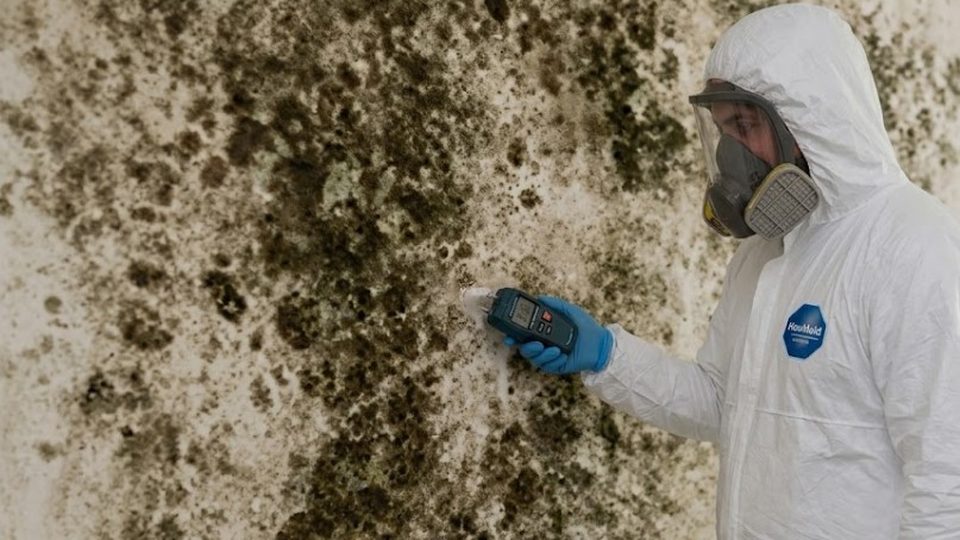
The Honest Threshold
Most articles with this title conclude that you should always hire a professional, which is convenient for the people publishing them. The truthful answer is that a good deal of small mold work is a competent homeowner job, and pretending otherwise wastes people’s money.
Here is the line we would actually draw.
- The affected area is under roughly ten square feet
- It is on a hard, non-porous surface — tile, glazed porcelain, painted concrete, metal, glass
- You know where the water came from and you have fixed it
- Nobody in the household is asthmatic, immunocompromised, pregnant, or an infant
- The growth is not on or behind porous material — no drywall, insulation, carpet pad or wood involved
- It has not come back before after cleaning
- The affected area is larger than about ten square feet
- It is on or behind porous material — drywall, insulation, carpet, wood
- You cannot identify where the water came from
- It has returned after previous cleaning — which proves the source was never found
- There was flooding, sewage, or standing water involved
- The HVAC system may be affected
- There is a musty smell with nothing visible — the growth is inside an assembly
- Anyone in the household is immunocompromised, asthmatic, pregnant, or an infant
- An insurance claim, landlord dispute or property sale is involved — you need documentation, not just cleaning
- You opened something up and found more than you expected — stop right there
Doing It Yourself, Properly
If you are in the first category, do it well. The method matters more than the product.
- Wear an N95 or better, gloves and sealed eye protection. Not a surgical mask, which does not filter spores.
- Damp-wipe. Never dry-brush, scrape or sand. Dry disturbance aerosolises everything. This is the single most important technique point.
- Contain the area with plastic sheeting if it is not a small enclosed room, and close the door.
- Turn off the HVAC while you work, so the system is not distributing what you disturb.
- Bag waste inside the room and seal the bag before carrying it out.
- HEPA-vacuum afterwards. A standard vacuum passes spores straight through and out the exhaust.
- Detergent and water works. Bleach is fine on hard non-porous surfaces; on porous material it does not work and can leave the substrate wetter. Physical removal is what matters.
- Fix the water first. Cleaning before the source is corrected is a scheduled repeat.
What a Professional Actually Adds
Not effort — equipment, method and documentation. Specifically:
- DiagnosisThermal imaging, moisture metering and dew point analysis find the water source and map the true extent. The wet area is almost always larger than the visible area, and that gap is where DIY jobs fail.
- Containment with negative airHEPA-filtered negative pressure exhausting outdoors means air flows into the work area rather than out of it. Without it, demolition inside a plastic tent still pushes spores into the house every time someone opens the flap.
- Knowing what to remove and where to cutCut lines set by moisture mapping, typically twelve to twenty-four inches beyond the last elevated reading, because the concealed face extends further than the visible one.
- Structural drying to documented targetsCommercial dehumidification with daily logged readings. This is the part that prevents recurrence and the part no homeowner can replicate.
- Independent verificationThird-party clearance testing — the only document that proves the job worked.
- A paper trailWhich is what you need for an insurance claim, a landlord dispute, or a disclosure when you sell.
The Pennsylvania Complication
There is a real catch to “hire a professional” advice in this state: Pennsylvania licenses nobody to do this work. No board, no exam, no register, no complaint process. Anyone may legally call themselves a certified mold remediation specialist.
So “hire a professional” is incomplete advice. The full version is: hire a professional and verify them yourself. Ask for general liability and pollution liability insurance certificates — the second is the one most often missing, and standard general liability frequently excludes mold outright. Ask for IICRC certification with a number. Ask for a PA HIC registration number for any rebuild work, checkable free through the Attorney General. And get a written scope naming the moisture source, the containment method, the drying targets and who performs clearance testing.
Full detail on that in how to vet a mold contractor in Pennsylvania.
The Middle Path Most People Miss
There is a useful option between doing everything and hiring everything: pay for the diagnosis, then decide.
An independent inspection from someone who does not perform remediation costs roughly $300 to $700 and produces numeric moisture readings, a stated cause, and a defined extent. With that in hand you can do the small work yourself, competitively quote the larger work knowing exactly what the scope should be, and avoid being sold a scope that has never been measured.
It also removes the incentive problem inherent in a free inspection, where the person telling you how much work you need is the person who will be paid to do it.
If you open something up and find more than you expected, stop. That is the moment DIY jobs go badly wrong — someone opens a wall, finds the growth extends four feet further, and carries on without containment, converting a localised problem into a whole-house one. Put the plastic back up, close the door, and make a phone call.
Questions This Article Raises Most Often
An N95 respirator as a minimum — a surgical or cloth mask does not filter spores — and for anything beyond a few square feet, an N99 or a half-face respirator with P100 cartridges is a better choice. Add nitrile or rubber gloves with a long cuff, and sealed goggles rather than glasses, because ordinary safety glasses let material in at the sides. Wear clothes you can wash immediately or a disposable coverall. If you have asthma, are immunocompromised, or are pregnant, do not do the work yourself regardless of the size.
Three clear stop signals. First, you open something up and the affected area is materially larger than you expected — that is the moment DIY jobs turn into whole-house contamination, because people carry on without containment. Second, you find growth on or behind porous material: wet drywall, insulation or carpet pad are removal jobs, not cleaning jobs. Third, you cannot identify where the water came from. Any of those, stop, put the plastic back up, close the door and make a phone call.
It can be, provided you understand the incentive: a free inspection is paid for by the remediation that follows, so the person telling you how much work you need is the person who will be paid to do it. That does not make it dishonest, and for an obvious, visible, well-understood problem it may be entirely adequate. Where it is worth paying instead is when a free assessment produces an unexpectedly large scope — at that point a paid inspection from someone who does not perform remediation usually saves more than it costs.
A small contained area — a section of bathroom wall, a closet, the area behind a water heater — is commonly one to two days including drying, and that is with containment set up, material removed, surfaces cleaned and drying equipment running. Be cautious of anyone who proposes to be in and out in two hours, because that is a cleaning visit rather than a remediation, and equally cautious of a small job quoted at a week without explanation. Drying time is the variable that legitimately extends a schedule, and it should be measured rather than scheduled.